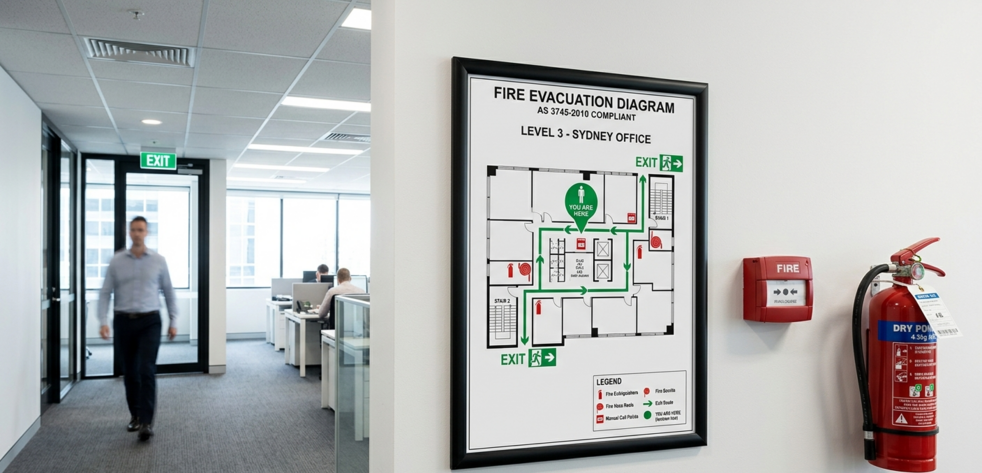
Evacuation diagrams are one of the most important safety tools used in Australian workplaces and commercial buildings. During emergencies such as fires, gas leaks, electrical hazards, or other dangerous situations, evacuation diagrams provide clear guidance that helps occupants leave the building quickly and safely. In Australia, evacuation diagrams are commonly required under Australian Standard AS 3745-2010, which sets out the procedures for emergency planning in workplaces and public buildings.
For business owners, property managers, strata managers, warehouse operators, schools, offices, retail stores, and industrial facilities, understanding evacuation diagram requirements is essential for both legal compliance and workplace safety. Properly designed evacuation diagrams not only help meet Australian safety standards but also reduce confusion and improve emergency response times during critical situations.
An evacuation diagram is a visual emergency plan displayed inside a building that shows occupants how to safely evacuate during an emergency. These diagrams provide a simplified floor layout with clearly marked emergency exits, evacuation routes, and fire safety equipment locations.
A professionally prepared evacuation diagram helps visitors, staff, contractors, and customers understand exactly where they are and how to exit the building safely in an emergency. In high-stress situations, simple and easy-to-read diagrams can make a major difference in protecting lives.
Under AS 3745-2010, evacuation diagrams must meet specific design and placement requirements. The standard outlines how diagrams should be displayed, what information must be included, and how they should support emergency procedures within the building.
An evacuation diagram must clearly display:
These important details help building occupants quickly identify the safest evacuation route during an emergency. Proper evacuation diagrams reduce panic and allow emergency procedures to operate more effectively.
Every workplace has a responsibility to provide a safe environment for employees and visitors. Emergency situations can happen unexpectedly, and having compliant evacuation diagrams helps businesses improve emergency preparedness while meeting workplace safety obligations.
Some key benefits of evacuation diagrams include:
For many businesses, evacuation diagrams are also required during fire safety inspections, insurance assessments, and workplace compliance audits.
The placement of evacuation diagrams is extremely important. Diagrams should be positioned where occupants can easily see them while moving through the building.
Common locations include:
In larger commercial or industrial facilities, multiple evacuation diagrams may be required throughout the building to ensure visibility from different sections.
Different building types may require different evacuation planning considerations. Offices, warehouses, schools, childcare centres, apartment buildings, factories, retail stores, and healthcare facilities all have unique evacuation risks and layouts.
For example:
One of the most important evacuation diagram requirements in Australia is ensuring the diagrams remain accurate and current. Whenever changes occur within the building, the evacuation diagrams should be reviewed and updated immediately.
Changes that may require updated diagrams include:
Outdated evacuation diagrams can create confusion during emergencies and may result in non-compliance with Australian standards.
Professional evacuation diagram providers help businesses create compliant and easy-to-read emergency diagrams that align with AS 3745-2010 requirements. These services often include site inspections, floor plan preparation, emergency equipment mapping, and compliance reviews.
Working with experienced professionals ensures:
Professionally prepared evacuation diagrams improve workplace safety while helping businesses meet fire safety and compliance obligations.
Evacuation diagrams are only one part of an overall emergency management system. They work together with emergency procedures, fire safety equipment, staff training, and evacuation drills to improve building safety.
Businesses should regularly:
A well-prepared emergency plan combined with compliant evacuation diagrams helps ensure occupants can respond quickly and safely during emergencies.
Understanding evacuation diagram requirements in Australia is essential for maintaining workplace safety and meeting compliance obligations under AS 3745-2010. Proper evacuation diagrams provide clear emergency guidance, improve occupant safety, and support effective emergency response procedures.
Whether for offices, warehouses, retail stores, schools, or residential buildings, professionally designed evacuation diagrams help businesses stay compliant while protecting employees, customers, and visitors. Keeping diagrams accurate, visible, and regularly updated is a critical part of every workplace emergency management plan.
