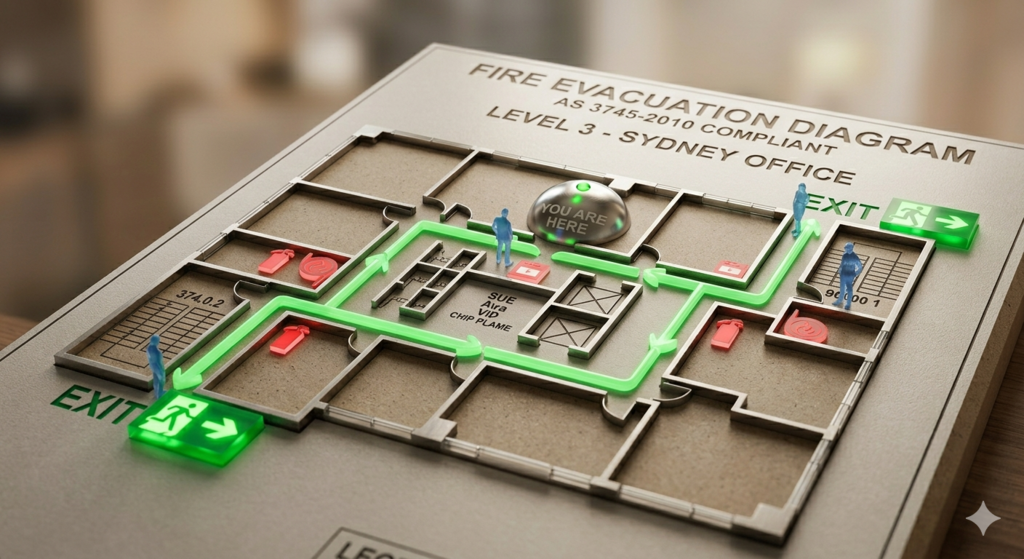
Modern office environments are designed to provide comfortable and productive workspaces, but they can still face serious emergencies at any time. Fires, smoke incidents, electrical faults, gas leaks, power failures, medical emergencies, and other unexpected hazards can place employees and visitors at risk. This is why having professionally prepared evacuation plans for offices is essential for workplace safety, emergency preparedness, and compliance with Australian standards.
An effective office evacuation plan provides clear instructions that help occupants safely leave the building during an emergency. Without proper planning, confusion, panic, and delayed evacuations can increase the risk of injuries and property damage. Businesses that invest in well-structured evacuation plans for offices create a safer environment for staff, clients, contractors, and visitors while meeting important workplace safety obligations.
Evacuation plans for offices are structured emergency procedures that explain how occupants should respond during dangerous situations. These plans identify evacuation routes, emergency exits, assembly points, and emergency responsibilities within the workplace.
Office evacuation plans are designed to ensure all occupants can exit the building quickly and safely during emergencies. They are an important part of workplace emergency management and are commonly developed in accordance with Australian Standard AS 3745-2010, which outlines emergency planning procedures for buildings and workplaces.
A professional office evacuation plan helps employees understand:
Clear and organised evacuation plans reduce uncertainty and improve emergency response times.
Many people assume offices are low-risk environments, but office buildings contain several potential hazards that can quickly become dangerous during emergencies. Electrical systems, kitchens, office equipment, air conditioning systems, storage rooms, and crowded workspaces can all contribute to emergency situations.
Evacuation plans for offices are important because they:
A properly planned evacuation procedure can significantly reduce injuries and improve overall workplace safety during emergencies.
Office evacuation plans should prepare occupants for a wide range of emergency situations. Some of the most common emergencies in office environments include:
A complete and compliant office evacuation plan should include all essential emergency information required for safe building evacuation.
Even the best evacuation plans for offices are ineffective if employees are not properly trained. Staff need regular emergency training so they understand evacuation procedures and know how to respond calmly during emergencies.
Office emergency training should include:
Regular evacuation drills help employees become familiar with emergency processes and identify any weaknesses in the evacuation plan.
In Australia, workplace emergency planning is commonly guided by AS 3745-2010. This standard outlines requirements for emergency control organisations, evacuation diagrams, emergency procedures, and evacuation planning within workplaces and buildings.
Businesses that implement compliant evacuation plans for offices improve their ability to meet workplace health and safety obligations while protecting occupants.
Compliance may involve:
Office environments frequently change over time. Renovations, new workstations, office expansions, and layout changes can affect evacuation routes and emergency access points.
Regular reviews ensure evacuation plans remain accurate and effective.
Updates may be required when:
Outdated office evacuation plans can create confusion and increase safety risks during emergencies.
Professional evacuation planning services help businesses create effective, compliant, and easy-to-follow emergency procedures tailored to their office layout and operations.
Benefits include:
Experienced professionals can assess office risks, identify evacuation challenges, and create practical emergency plans suited to the workplace.
Large office buildings often require more detailed emergency planning because of multiple floors, higher occupant numbers, lift systems, underground parking, and shared tenancy arrangements.
Large office evacuation plans may include:
Complex office buildings benefit greatly from professionally managed evacuation planning and regular emergency drills.
Evacuation plans for offices are a critical part of workplace safety and emergency preparedness. Emergencies can happen without warning, and having clear evacuation procedures helps protect employees, visitors, and contractors while reducing confusion during high-pressure situations.
By implementing professional office evacuation plans, conducting regular training, maintaining updated evacuation diagrams, and following Australian standards, businesses can create safer workplaces and improve emergency response capabilities.
Whether for small offices or large commercial buildings, effective evacuation plans are essential for protecting lives and supporting workplace safety compliance across Australia.
