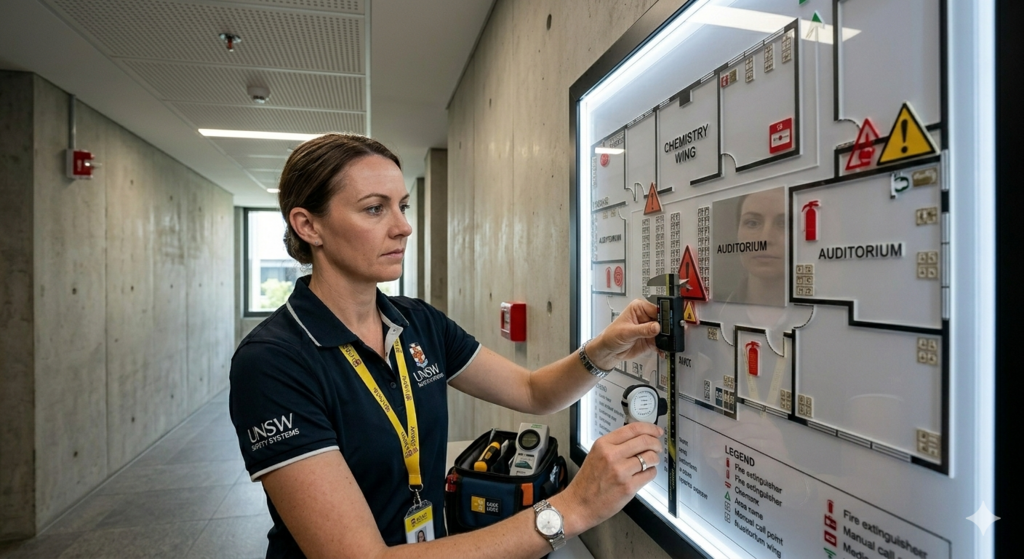
During emergencies, every second matters. Fires, smoke incidents, electrical faults, gas leaks, and other dangerous situations can quickly place building occupants at risk. In these high-pressure moments, clear emergency information is essential for helping people evacuate safely and efficiently. This is why professional evacuation diagrams play a critical role in improving emergency response across workplaces and commercial buildings.
Professionally designed evacuation diagrams provide clear visual guidance that helps employees, visitors, contractors, and customers understand how to respond during emergencies. Accurate and compliant evacuation diagrams reduce confusion, improve evacuation speed, and support safer emergency procedures.
Businesses across Australia rely on professional evacuation diagrams to improve workplace safety while meeting emergency planning requirements under Australian Standards such as AS 3745-2010.
Professional evacuation diagrams are detailed emergency plans that visually display important safety information within a building. These diagrams help occupants quickly identify evacuation routes, emergency exits, fire safety equipment, and assembly areas during emergencies.
Unlike basic floor plans, professionally prepared evacuation diagrams are designed specifically for emergency situations. They use standardised symbols, simplified layouts, and clear instructions to improve readability and emergency response.
Professional evacuation diagrams commonly include:
These diagrams help occupants make quick decisions during emergencies when visibility, stress, and confusion may affect normal reactions.
Emergencies often create panic and uncertainty, especially in large or unfamiliar buildings. Without clear evacuation information, occupants may struggle to locate exits or follow safe evacuation procedures.
Poorly designed evacuation diagrams can create serious problems by:
When evacuation information is inaccurate or difficult to read, emergency response times can slow significantly. Delays during evacuations increase the risk of injuries, smoke exposure, and confusion among building occupants.
Professionally prepared evacuation diagrams help eliminate these risks by providing accurate, easy-to-understand emergency guidance.
Professional evacuation diagrams improve emergency response by helping occupants react quickly and safely during emergencies.
Professional evacuation diagrams are carefully designed to meet Australian safety standards and improve emergency preparedness.
In Australia, evacuation diagrams are commonly prepared according to AS 3745-2010, the Australian Standard for planning emergencies in facilities. This standard outlines requirements for emergency planning, evacuation procedures, and evacuation diagram design.
Professional evacuation diagrams help businesses:
Compliance with AS 3745-2010 is particularly important for commercial buildings, offices, warehouses, schools, strata properties, and public facilities.
Different buildings require different emergency planning considerations. Professionally prepared evacuation diagrams can be customised to suit specific layouts, operational hazards, and occupancy requirements.
One of the most important aspects of emergency planning is ensuring evacuation diagrams remain accurate at all times. Building layouts often change due to renovations, office fit-outs, new equipment installations, or operational adjustments.
Evacuation diagrams should be updated whenever:
Outdated evacuation diagrams can reduce evacuation efficiency and create safety risks during emergencies.
Working with experienced evacuation diagram professionals helps businesses create accurate and compliant emergency plans tailored to their building layout and operational needs.
Benefits include:
Professional services may also include site inspections, emergency planning reviews, fire equipment mapping, and evacuation diagram installation.
Professional evacuation diagrams are a key part of overall workplace emergency management. Combined with staff training, emergency drills, and fire safety procedures, they help businesses prepare for emergencies more effectively.
Businesses should regularly:
Prepared workplaces are better equipped to manage emergencies safely and efficiently.
Professional evacuation diagrams play a vital role in improving emergency response and workplace safety across Australian buildings and facilities. Clear, accurate, and compliant evacuation diagrams help occupants evacuate quickly, reduce confusion during emergencies, and support compliance with Australian fire safety standards.
Whether for offices, warehouses, schools, commercial buildings, or strata properties, professionally prepared evacuation diagrams help create safer environments while improving emergency preparedness for employees, visitors, and building occupants alike.
